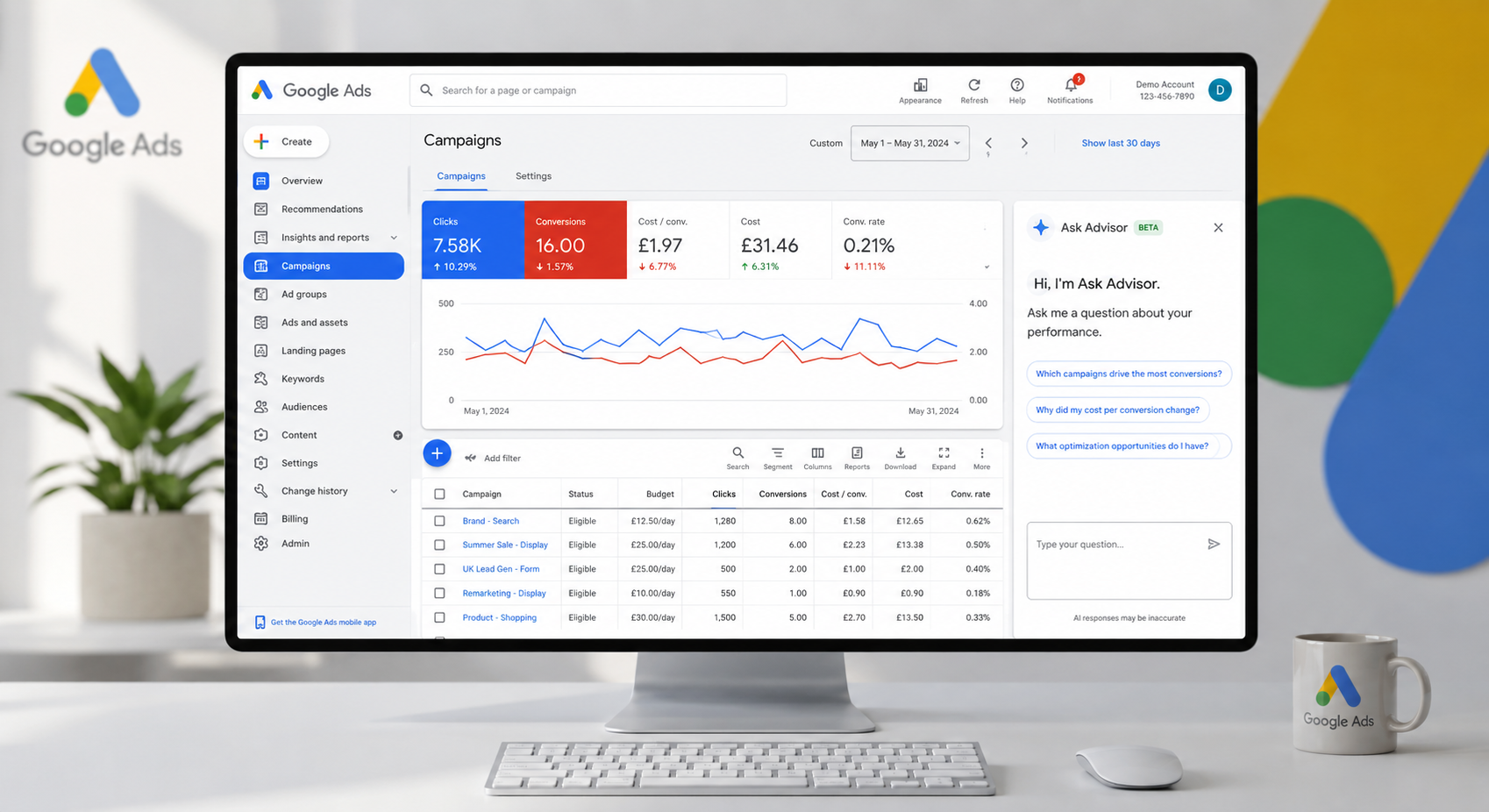
When paid search costs rise but lead quality or ecommerce revenue fails to follow, a PPC recovery case is not about making a few cosmetic account changes. It is a commercial exercise: establish where budget is leaking, verify whether performance data can be trusted, and rebuild campaigns around profitable demand.
For a business owner or marketing manager, the warning signs tend to be clear. Cost per lead is climbing, sales teams are rejecting enquiries, return on ad spend is falling, or the account appears busy while profit is flat. The temptation is to cut budgets or switch agencies immediately. Either may be appropriate, but first you need a proper diagnosis. Paid media recovery works when decisions are based on evidence, not surface-level platform recommendations.
What a PPC recovery case should prove
A credible recovery process should answer three questions. Which activity is producing genuine commercial value? Which spend is being wasted or overstated? And what must change for growth to become sustainable?
That distinction matters because Google Ads and paid social platforms can report activity that looks positive without reflecting the outcome your business needs. A form completion may be a low-quality enquiry. A purchase may be duplicated in tracking. A strong platform ROAS may ignore returns, low margins, cancelled orders or the cost of attracting customers who never buy again.
The objective is not to make dashboards look better. It is to improve the metrics that affect the business: qualified lead volume, cost per acquisition, revenue, contribution margin and profitable ROAS.
Start with measurement, not campaign settings
Many troubled accounts have been optimised against incomplete or inaccurate conversion data. If the tracking signal is wrong, even well-built campaigns will learn the wrong behaviours. This is especially relevant with automated bidding, Performance Max and broad match, where Google uses conversion feedback to decide who sees your ads and how aggressively to bid.
A recovery audit should check whether primary conversions represent real value. For lead generation, this might mean separating a genuine enquiry, booked appointment or completed call from page views, button clicks and unqualified contact forms. For ecommerce, it means validating transaction values, checking for duplicate purchase events and accounting for refunds where possible.
Offline conversion imports can be highly valuable for businesses with longer sales cycles. If a £20 form lead rarely becomes a customer, but a £75 enquiry often becomes a £5,000 contract, the account needs to know the difference. Feeding qualified lead or revenue data back into Google Ads can materially improve bidding decisions, although it requires reliable CRM processes and enough conversion volume to be useful.
There is a trade-off here. Tracking every micro-action can give marketers more information, but it can also dilute the bidding signal. The key is to use supporting metrics for analysis while keeping the most commercially meaningful action as the primary optimisation goal.
Find wasted spend before asking for more budget
Once measurement is credible, the next task is to identify where spend is failing. This is rarely one dramatic error. More often, the loss comes from several smaller issues that have been allowed to run for too long.
Search term analysis is usually a productive starting point. Broad match can uncover valuable new demand, particularly where the account has strong conversion data and appropriate bidding controls. It can also spend heavily on research-led, irrelevant or competitor-adjacent searches if left without disciplined review. Negative keywords are not a one-off setup task. They need regular maintenance, informed by how customers actually search.
Location targeting deserves the same scrutiny. A London business may want to reach people physically located in its service area, not users elsewhere who have merely shown interest in it. Language settings, audience expansion and display placements can create similar discrepancies between intended and actual reach.
For ecommerce advertisers, product feed quality often sits at the centre of the problem. Weak titles, incomplete attributes, poor categorisation and unavailable items can restrict Shopping and Performance Max performance before bidding strategy even enters the conversation. Better feed structure gives the platform more accurate context and gives potential customers clearer reasons to click.
A useful audit will examine at least these areas:
- Search terms, negative keywords and match-type control
- Geographic settings, ad schedules and device performance
- Product feed accuracy, pricing and stock status
- Display, video and app placements where relevant
- Brand versus non-brand spend and the incrementality of branded traffic
- Audience exclusions, remarketing windows and frequency
The aim is not to cut every expensive click. Some high-cost clicks are commercially worthwhile. The question is whether their conversion quality and eventual value justify the investment.
Rebuild campaign structure around business decisions
A PPC recovery case often reveals an account structure that has become too fragmented, too automated or too difficult to manage. Hundreds of low-volume ad groups may prevent meaningful optimisation. On the other hand, placing every product, service and audience into one campaign can conceal major profitability differences.
The right structure depends on the business model. A local service provider may need campaigns organised around high-intent services, locations and opening hours. An ecommerce retailer may need separate budget control for bestsellers, high-margin categories, new customer acquisition and clearance stock. A B2B business with a long buying cycle may need to distinguish between immediate enquiry generation and remarketing to decision-makers who need more time.
This is where commercial input matters. Google cannot know which services have limited capacity, which products carry poor margins or which regions your sales team can support without being told. PPC management should translate those business priorities into campaign budgets, conversion values, exclusions and reporting.
Performance Max can have a role in a recovered account, particularly when product data, creative assets and measurement are strong. It should not be treated as a black box that replaces strategic campaign management. Segment where practical, monitor search themes and placement insights, and compare performance against other campaigns before moving more budget into it.
Improve the journey after the click
Not every PPC problem is a media-buying problem. If traffic arrives on a slow page, meets vague messaging or cannot easily complete an action on mobile, campaigns will become more expensive regardless of targeting quality.
Review the relationship between the search query, ad copy and landing page. Someone searching for emergency boiler repair needs a direct service page, prominent phone number, clear coverage area and confidence-building proof. Sending that person to a generic homepage creates friction and makes every click work harder than it should.
For ecommerce, the landing experience includes product availability, delivery costs, returns information, reviews and checkout speed. A campaign may be attracting the right shoppers but losing them at checkout due to unexpected charges or a poor mobile experience. In that scenario, reducing bids may lower spend, but it will not solve the underlying conversion-rate problem.
Testing should be purposeful. Prioritise changes that address a known barrier, such as simplifying a lead form, clarifying price expectations or matching headline copy to the highest-value search intent. Avoid changing campaigns, landing pages, budgets and bidding targets simultaneously. If everything changes at once, you cannot identify what drove the result.
Set recovery targets that protect profitability
Recovery is not instant, particularly when tracking is being repaired or bidding strategies need time to relearn. However, that does not mean accepting vague promises. Agree a baseline and define the commercial measures that matter before changes begin.
For lead generation, this could be cost per qualified lead, booked consultations, sales acceptance rate and pipeline value. For ecommerce, it may include revenue, new-customer ROAS, average order value, gross margin and repeat purchase rate. A target CPA or ROAS must reflect business economics, not an arbitrary platform benchmark.
For example, a lower CPA is not automatically an improvement if it comes from low-intent leads that never convert. Equally, chasing high ROAS can restrict volume if the account only targets existing customers or branded searches. The best target balances efficiency with the level of growth the business can profitably fulfil.
Why recovery requires ongoing judgement
The work does not end once performance improves. Search behaviour changes, competitors adjust bids, stock levels move, and platforms introduce new automation features. A recovered account needs regular search-term reviews, budget decisions, creative testing and reporting that connects ad spend to real outcomes.
Maple Forest Marketing approaches this as an accountable growth partnership rather than a set-and-forget advertising service. The strongest results come from combining platform expertise with honest client-side data about lead quality, sales capacity, margins and priorities.
If your account is generating clicks but not enough profitable business, start by asking whether the data, targeting and customer journey can each withstand scrutiny. That single conversation often identifies the most valuable next move – and prevents another month of budget being spent on activity that merely looks busy.