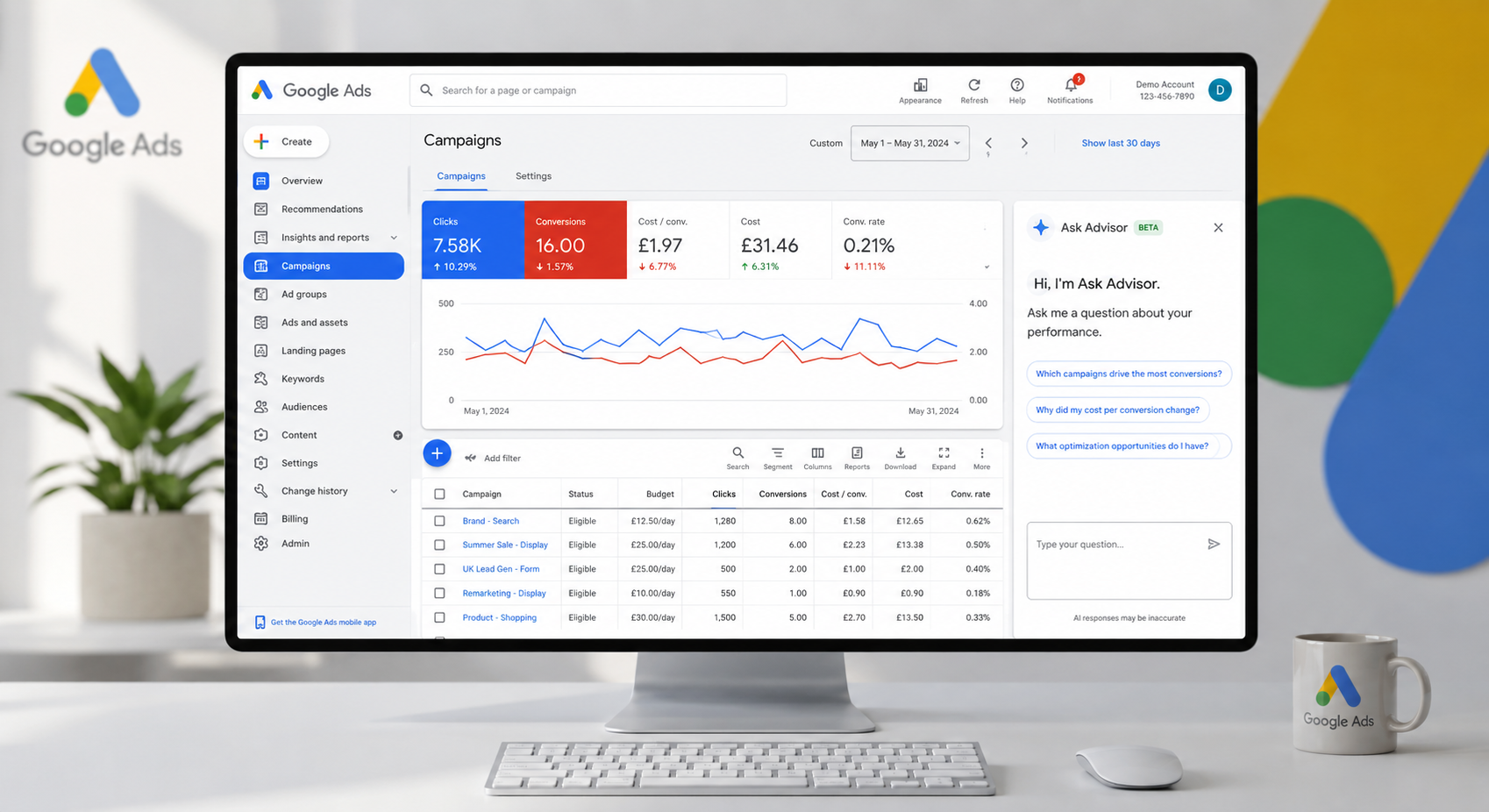
Google Ads is not a waiting room. A campaign can generate impressions, clicks and even enquiries on its first day. But if you are asking how long does PPC take because you need dependable sales, profitable lead volume and a clear return on spend, the honest answer is more measured: most campaigns need around 30 to 90 days to establish meaningful performance.
The exact timeframe depends on your budget, market, website, conversion tracking and how quickly the account receives enough quality data to improve. PPC can move fast, but fast activity is not the same as commercial success. The aim is not simply to buy traffic. It is to identify the searches, audiences, adverts and landing pages that produce profitable outcomes.
How Long Does PPC Take? A Realistic Timeline
A well-built PPC campaign should not spend weeks sitting in draft. Research, tracking checks, campaign build and launch can often happen within days. What takes time is gathering enough conversion data to make sound decisions rather than reacting to a handful of clicks.
Days 1-14: Launch, validation and early signals
The first fortnight is about ensuring the foundations are working. Campaigns begin entering auctions, adverts are approved, search terms appear, and initial performance signals emerge. You may see leads or sales immediately, particularly where search demand is strong and the offer is clear.
At this stage, an experienced PPC manager will be checking whether conversion tracking is recording accurately, whether budgets are reaching the right campaigns, and whether irrelevant search queries are consuming spend. Negative keywords, location settings, device performance and advert messaging often require early adjustments.
It is too early to judge a campaign solely on cost per acquisition or ROAS. One expensive enquiry or one high-value order can distort the numbers when data volume is low. That said, clear warning signs should never be ignored. If clicks are irrelevant, tracking is broken or a campaign cannot spend because bids are uncompetitive, those issues need action straight away.
Weeks 3-6: The optimisation period begins
By this point, there is usually enough information to see patterns. Which keywords drive qualified leads? Which products sell? Are mobile users converting as well as desktop users? Is one geographic area producing far stronger results than another?
This is where campaign structure, advert testing and landing page quality start to matter more than headline click volume. A lower click-through rate can still be commercially stronger if it filters out unqualified visitors. Equally, a campaign with an attractive cost per click can be poor value if those clicks do not become enquiries, sales or revenue.
Automated bidding strategies, including those used in Performance Max and Search campaigns, may also be learning during this period. Automation can help scale decisions across large accounts, but it needs clean conversion signals and sensible guardrails. Feeding it poor-quality leads, duplicate transactions or vanity conversions will encourage it to find more of the wrong thing.
Days 60-90: More reliable performance decisions
For many businesses, the second and third month is when PPC reporting becomes genuinely useful. There should be enough conversion history to assess trends, improve bidding confidence and decide where additional budget will produce a return.
This does not mean optimisation stops after 90 days. Competitors change bids, demand shifts with the season, stock levels change and customers respond differently to promotions. It does mean you can move from initial testing to more informed budget allocation.
For ecommerce, this may involve shifting spend towards higher-margin product categories, improving shopping feed quality and separating proven bestsellers from experimental ranges. For lead generation, the focus may be on which sources produce booked appointments, qualified opportunities and revenue rather than form fills alone.
What Determines How Quickly PPC Produces Results?
There is no universal answer because two businesses spending the same amount can have very different conditions. A London emergency plumber with strong local demand may see calls quickly. A B2B software company selling a complex service with a six-month buying cycle will need longer to prove revenue impact.
Four factors have the greatest influence:
- Search demand and competition: High-intent searches can convert quickly, but competitive sectors such as legal, finance, property and home improvement often have costly clicks. A small budget may not generate enough data at the required pace.
- Budget relative to cost per click: If a typical click costs £8 and a campaign has £10 per day, learning will be slow. The budget must support enough relevant visits and conversions to identify a pattern.
- Conversion rate and website experience: PPC can bring suitable visitors, but it cannot compensate indefinitely for a confusing website, weak offer, slow mobile page or form that asks for too much information.
- Conversion quality and sales follow-up: A low-cost lead has limited value if the sales team cannot contact it promptly or if most enquiries are unsuitable. Closed-loop reporting is essential for higher-value services.
Why Early PPC Results Can Mislead
One of the costliest mistakes in paid media is making large changes too often. Pausing a keyword after two clicks, replacing every advert after a few days, or repeatedly changing budgets can prevent a campaign from gathering the data needed to improve.
The opposite mistake is equally expensive: leaving a campaign untouched for a month because it has produced a few conversions. PPC accounts require active management. Search terms need reviewing, bids and budgets need monitoring, and landing-page friction should be addressed when the data supports it.
Consider a business that receives ten leads in its first two weeks. That can sound encouraging. But if only two are qualified and neither becomes a customer, the campaign has not yet demonstrated success. Conversely, a campaign with five leads may be highly profitable if three become high-value clients.
That is why cost per lead is only one part of the picture. The more useful commercial measures are qualified lead rate, cost per qualified lead, conversion rate, revenue, CPA, ROAS and, where possible, net margin profitability.
Setting PPC Expectations for Lead Generation and Ecommerce
Lead-generation campaigns should be assessed against the full journey from click to sale. In the first month, the immediate target may be a stable flow of relevant enquiries at an acceptable cost. Over the following months, the priority is understanding which campaigns produce opportunities the sales team can actually close.
For ecommerce, feedback arrives faster because purchases can be tracked directly. Even so, a first-month ROAS figure can be misleading if a campaign captures existing brand demand, discounts heavily, or spends disproportionately on low-margin products. Profitability, repeat purchase behaviour and contribution margin deserve a place in the analysis.
Seasonality also matters. A retailer launching before Black Friday may see rapid data but unusually high auction costs. A garden business may have to wait for demand to return in spring. Good PPC management accounts for these realities rather than promising identical results every month.
How to Give a PPC Campaign Its Best Start
The fastest route to useful PPC data is not rushing the launch. It is getting the essentials right before spend begins. That means accurate tracking for calls, forms, purchases and key actions; a clear definition of a qualified lead; realistic budgets; and landing pages that make it easy for the right customer to act.
Campaigns should also be built around intent. Search campaigns are often the quickest way to capture people actively looking for a product or service. Paid social, Demand Gen, YouTube and display can be highly valuable for reaching new audiences, remarketing and creating demand, but they normally require more testing and a longer view of attribution.
At Maple Forest Marketing, the practical approach is to judge performance against the metrics that matter to the business, not the platform’s most flattering numbers. That includes finding wasted spend early, protecting budget from poor-quality traffic and scaling only when the evidence supports it.
PPC should show early signs of life within days, clearer direction within weeks and a more dependable basis for investment within 90 days. Give it enough data to earn your confidence, but keep every pound accountable while it does.