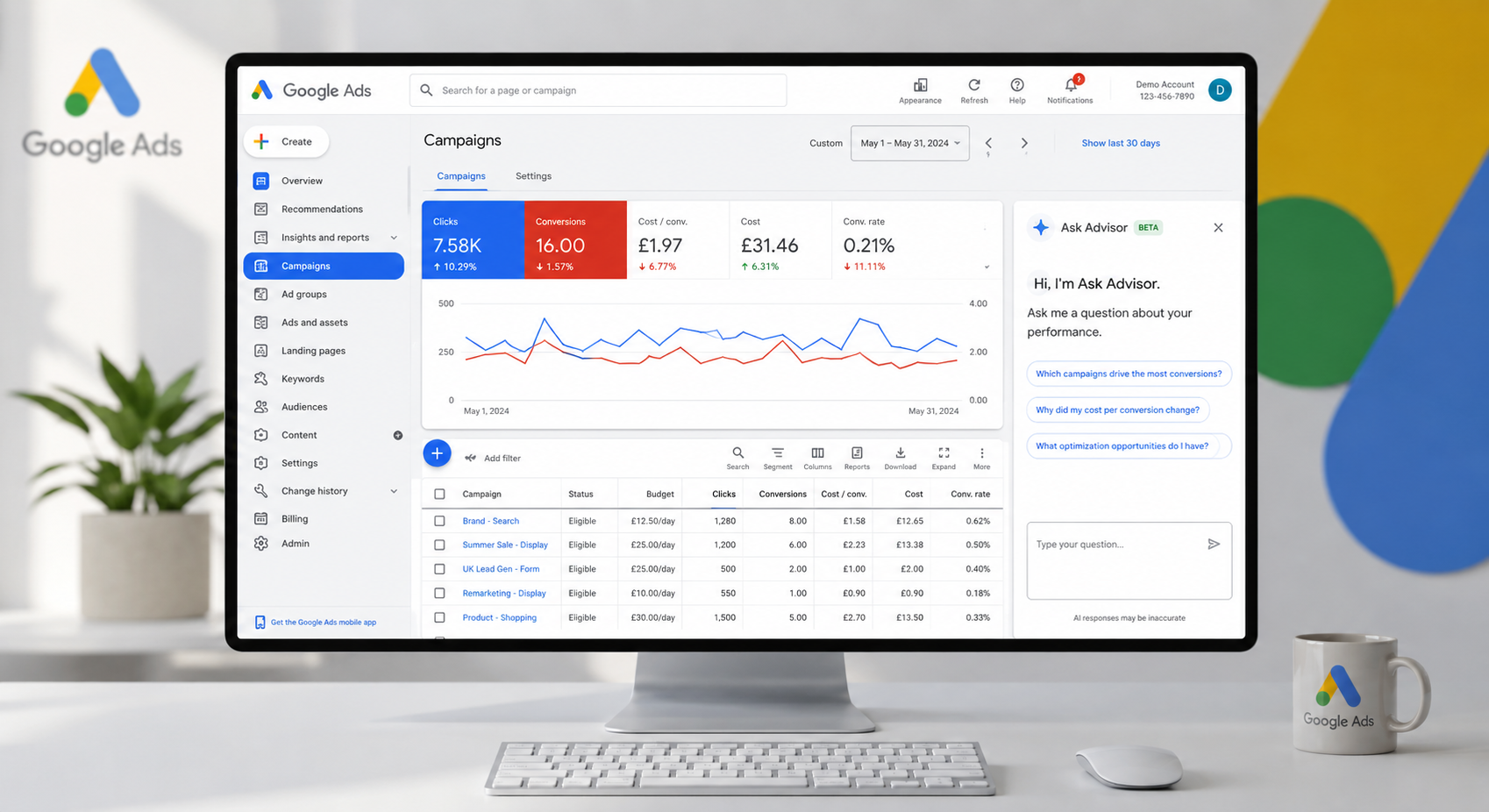
A rising cost per sale is rarely caused by one bad campaign. More often, it is the combined effect of broad targeting, weak product economics, incomplete tracking and a website that gives paid traffic too many reasons to leave. To lower ecommerce acquisition costs sustainably, retailers need to improve the full route from impression to profitable repeat purchase – not simply chase cheaper clicks.
For a UK ecommerce business, the right target is not always the lowest possible CPA. A £20 acquisition cost may be excellent for a high-margin product with repeat purchase potential, while a £10 CPA can still lose money on a heavily discounted, low-margin item. The commercial question is whether each acquisition produces enough contribution after product cost, fulfilment, returns, VAT, agency costs and ad spend.
Start with a profitable acquisition target
Before changing bids, establish what a new customer is genuinely worth. Too many accounts optimise around revenue alone, particularly when Performance Max or paid social campaigns are allowed to pursue a broad ROAS target without enough attention to margin.
A practical starting point is to calculate your allowable customer acquisition cost. Take the expected first-order gross profit, then add a sensible share of expected repeat-order profit where retention data supports it. Deduct the costs that sit outside media spend, including packaging, delivery subsidies, returns and promotional discounts.
This gives your team a meaningful decision-making threshold. It also stops a familiar mistake: scaling the products that generate attractive top-line revenue but little or no net margin.
For example, a £100 order does not automatically justify a £25 CPA. If the order produces only £18 in contribution after fulfilment and discounting, that campaign is not a growth engine. It is buying unprofitable turnover. Conversely, a premium product with strong gross margin may support a higher CPA and deserve more budget.
Fix measurement before asking platforms to optimise
Google Ads, Meta and TikTok can only optimise towards the signals they receive. If tracking misses purchases, duplicates revenue, ignores refunds or attributes every sale to the last click, automated bidding will make poor decisions at scale.
Check that purchase conversions are firing once, passing accurate transaction values and recording currency correctly. Ensure consent mode, enhanced conversions and server-side tracking are configured where appropriate. For Meta, the Conversions API can improve event quality and reduce reliance on browser-based tracking alone.
The goal is not to create the most complicated analytics setup. It is to give ad platforms dependable signals while retaining an independent view of performance through GA4, ecommerce platform data and, where possible, your finance reporting.
Measure new customers separately from returning customers
Blended ROAS can look healthy when brand search and returning buyers do most of the work. That does not mean prospecting activity is efficient. Separate new and returning customer revenue where your ecommerce platform allows it, then compare acquisition cost by channel, campaign and product category.
This is especially valuable for brands with loyal audiences. Paid search may appear to be driving growth when it is primarily collecting demand created by email, organic social or previous advertising. Branded campaigns still have a role, but they should not hide weak cold-audience performance.
Reduce wasted spend in your account structure
Lowering acquisition cost often starts with removing budget that has no realistic route to a sale. A regular search term review remains essential, even when smart bidding handles much of the day-to-day bidding.
Look for irrelevant searches, job seekers, information-only queries and competitor terms that consume budget without producing profitable orders. Add negatives carefully. Overly aggressive exclusions can block valuable long-tail demand, particularly for products with varied use cases.
Product feed quality matters just as much for Shopping and Performance Max. Titles, images, prices, availability, GTINs and product types directly affect how well Google understands what you sell. A poor feed forces the platform to guess. A well-structured feed helps it match products with higher-intent searches.
Segment products according to commercial value, not just catalogue convenience. Best sellers, high-margin lines, seasonal products and clearance stock should not automatically receive the same bidding strategy. If a category has a high return rate or thin margin, it may need a tighter target or a reduced budget even if it produces plenty of revenue.
Improve conversion rate before increasing spend
A modest improvement in conversion rate can have a material effect on acquisition cost. If a campaign generates 1,000 clicks at £1 each, a conversion rate increase from 2% to 2.5% creates five additional orders without raising media spend. Your CPA drops from £50 to £40.
The strongest conversion rate optimisation work is usually practical rather than dramatic. Product pages need clear delivery information, credible reviews, useful imagery, straightforward sizing or specification guidance and a visible returns policy. Mobile checkout should be quick, with as few surprises as possible.
Pay particular attention to the relationship between advert and landing page. If an advert promotes a specific offer, bundle or product benefit, the landing page must continue that message immediately. Sending a shopper to a generic collection page may be appropriate for broad discovery campaigns, but it often wastes high-intent search traffic.
Test the commercial friction points
Rather than changing everything at once, test the issues most likely to prevent purchase. These commonly include delivery charges revealed late in checkout, weak product photography, unavailable payment methods, unclear dispatch times and discount codes that train buyers to wait.
Not every test will lower acquisition costs. Free delivery can lift conversion rate but erode margin. A permanent discount may improve paid-social results while reducing profitability and perceived product value. Evaluate changes against contribution profit, not conversion rate in isolation.
Use audience strategy to control prospecting costs
Paid social is often where ecommerce acquisition costs become volatile. Broad targeting can work well when the creative is strong, the pixel has sufficient purchase data and the product has broad appeal. It can also spend quickly with little to show if the account lacks clear signals or the offer is not distinctive enough.
Build prospecting around creative angles rather than relying on dozens of narrow interests. Test product demonstrations, customer objections, social proof, gifting occasions, price justification and problem-solution messages. The advert should do some of the qualifying before the click.
Retargeting deserves a controlled budget, not unlimited spend. It is efficient because it reaches people already familiar with the brand, but its available audience is finite. Excessive frequency can annoy potential customers and inflate reported results by repeatedly claiming credit for sales that would have happened anyway.
For higher-consideration products, use remarketing windows that reflect the buying cycle. A customer considering furniture, premium skincare or specialist equipment may need more time than someone buying an everyday consumable. The right approach depends on your product, price point and typical time to purchase.
Let automation work, but set the guardrails
Smart bidding, Performance Max and AI-assisted campaign tools can process more signals than any manual account manager. They are useful for finding conversion opportunities across large inventories and changing auctions. But they are not a substitute for commercial oversight.
Platforms are designed to increase activity on their platforms. Your job is to protect profitable growth. Set realistic CPA or ROAS targets, exclude clearly unsuitable traffic, use accurate conversion values and review where spend is moving. If a campaign is meeting its ROAS target by favouring branded demand or low-margin products, it needs intervention rather than applause.
Avoid changing targets every few days. Automated campaigns need time to learn, particularly after budget changes, feed updates or tracking fixes. Make purposeful changes, document them and judge results over a period that reflects your conversion volume.
Reallocate budget based on marginal return
The best-performing campaign is not always the best place for the next pound of spend. As budget increases, acquisition costs often rise because the platform must reach less obvious prospects. Review marginal CPA or marginal ROAS: what did the additional spend produce, rather than what did the campaign achieve historically?
This approach helps avoid overfunding a campaign that has already captured its easiest demand. It also creates room to test newer channels such as Demand Gen, YouTube, TikTok or display remarketing with controlled budgets and clear learning objectives.
A disciplined weekly review should consider spend, sales, CPA, ROAS, conversion rate, average order value, new-customer share and margin. Monthly reviews should go further, examining product profitability, repeat purchase behaviour and channel incrementality. That is how advertising decisions become commercial decisions.
For ecommerce teams that need an independent view of where budget is leaking, a structured PPC audit can identify tracking gaps, wasted queries, feed issues and missed conversion opportunities. Maple Forest Marketing approaches this work with the same principle: every pound should have a clear role in generating accountable, profitable growth.
The most reliable way to lower acquisition costs is not to demand lower CPAs from every campaign. It is to build a better system around product economics, trustworthy data, persuasive creative and a buying journey that earns the click you have paid for.